Memory Boost Worksheets: Printable Recall & Study Tools
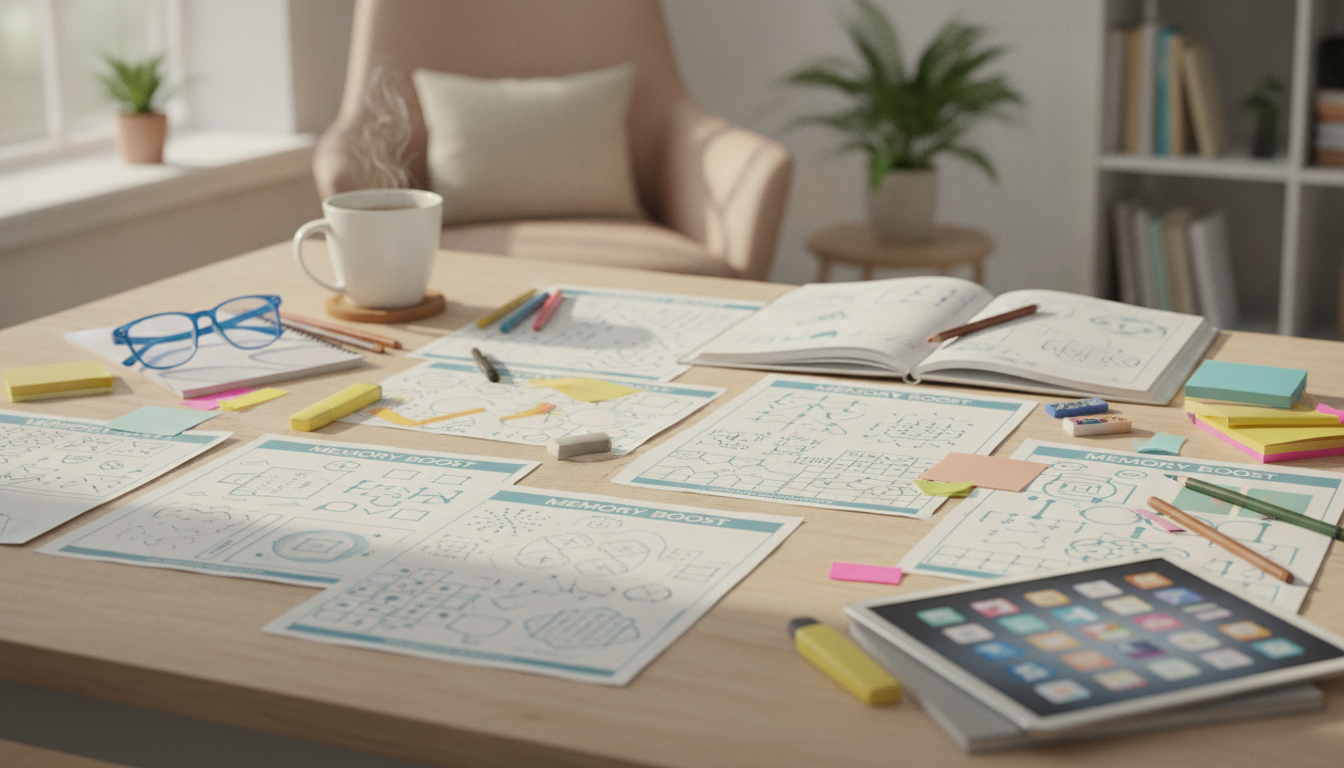
Memory Boost Worksheets for Students and Adults: Printable Exercises for Study, Recall, and Everyday Focus
A stronger memory is built through small, repeatable habits: paying attention, organizing information, practicing recall, and reviewing at the right times. Printable and digital worksheets make those habits easier to follow by turning memory training into quick sessions that fit school, work, and daily life. This guide breaks down practical worksheet-based activities for students and adults, plus a simple weekly routine that supports learning, retention, and confident recall.
What “memory training” looks like in real life
Memory gets better when three steps work together: attention (noticing the right details), encoding (giving information meaning), and retrieval (pulling it back out when needed). Worksheets support all three by turning “I should study” into clear prompts you can complete even when energy is low.
- Attention + encoding: Structured pages help you slow down long enough to label, sort, and connect ideas instead of skimming.
- Retrieval practice: The most useful worksheets require answers from memory before you check notes—an approach strongly supported by cognitive science (see retrieval practice research).
- Less decision fatigue: A worksheet tells you what to do next, so practice happens even on busy days.
- Better “feel” first, then better results: Many people notice faster recall and fewer “blanking” moments before they see longer-term retention gains.
Worksheet types that build recall and retention
Effective memory sets aren’t just puzzles. They combine practical learning techniques—active recall, spaced review, and smart organization—so improvement transfers to classwork, meetings, and everyday tasks. Evidence reviews consistently highlight strategies like practice testing and spacing for durable learning (see Dunlosky et al. and the APA overview on spaced repetition).
- Active recall prompts: Questions, blanks, and self-quizzes that force retrieval instead of rereading.
- Spaced review planners: Simple schedules that bring material back at the right intervals (when forgetting starts).
- Chunking and categorizing pages: Templates that group details into meaningful clusters so your brain has “folders” to store and find information.
- Mnemonic builders: Guided steps for acronyms, imagery, story chains, and association—especially useful for lists and sequences.
- Working memory drills: Short tasks that build mental stamina, sequencing, and attention control without requiring hours.
Common worksheet exercises and what they strengthen
| Worksheet exercise | Best for | How to use | Time |
|---|---|---|---|
| Rapid recall quiz | Study retention | Cover notes, answer from memory, then check and correct | 5–10 min |
| Spaced repetition tracker | Long-term memory | Schedule reviews (Day 1, 3, 7, 14) and log outcomes | 2–5 min daily |
| Chunking grid | Complex topics | Group ideas into 3–7 clusters with labels and examples | 10–15 min |
| Memory palace prompt | Lists and sequences | Assign items to familiar locations, then “walk through” | 10–20 min |
| Interleaving set | Test/exam prep | Mix topics (A-B-C) rather than finishing one topic fully | 15–25 min |
A simple weekly routine (print or digital) that stays doable
The best routine is the one you can repeat. A worksheet-based plan works well when it’s short, slightly challenging, and designed around frequent retrieval.
- Daily (10–15 minutes): Complete 1 recall page plus 1 short working-memory drill. Keep difficulty moderate so you can stay consistent.
- Twice weekly (15–25 minutes): Use chunking/mapping or a mnemonic builder for the hardest content. Turn notes into prompts (questions, blanks, or “explain it simply” boxes).
- Weekly review (20 minutes): Follow a spaced tracker to revisit older material. Start with what you missed last time.
- One real-world session: Apply the same recall prompts to names, errands, steps in a work process, or talking points for a presentation.
- Track wins: Write down what improved (speed, accuracy, confidence) and one adjustment for next week.
How to adapt worksheets for students, adults, and busy schedules
Students (middle school and high school)
Connect pages directly to current units. After each lesson, create 5–10 questions from notes and schedule them on a spaced tracker. This turns homework into targeted retrieval instead of extra rereading.
College and test prep
Lean on interleaving sets and timed recall. Mixing topics on purpose helps you practice choosing the right method under pressure, which is closer to real exam conditions.
Adults at work
Build prompts around what actually matters: meeting takeaways, key metrics, SOP steps, industry vocabulary, or a short pitch. Keep sessions short enough to complete between tasks, then do a spaced check-in before the next meeting.
Older adults
Low time days
Common obstacles and quick fixes
Printable and digital options: what to look for
Memory Boost Worksheets for Students & Adults: a ready-to-use set of practice tools
If you want a structured system you can start right away, Memory Boost Worksheets for Students & Adults (Printable Digital Download) is designed to support study, recall, and everyday memory with repeatable pages you can print or use digitally.
Memory also depends on stress levels and attention. Pairing memory practice with calming routines can make it easier to focus and follow through, especially during busy seasons. Consider adding Break the Tension: Stress Relief Techniques for short breathing and grounding exercises, or The Anxiety Relief Bundle: A Path to Calm if you prefer a broader set of mindfulness and positive-thinking tools.
FAQ
How often should memory worksheets be used to see improvement?
Short daily sessions (about 10–15 minutes) plus a weekly spaced-review check-in tend to work better than long, occasional practice. Consistency and retrieval practice matter more than cramming.
Are printable worksheets or digital worksheets better for memory practice?
Either can work well. Print is often easier for distraction-free handwriting, while digital files are great for quick reuse and annotation; many people get the best results by mixing both.
Do memory worksheets help with studying for exams or learning new skills at work?
Yes—worksheets that emphasize active recall, spaced repetition, and chunking are directly useful for exam prep and job training. Turning notes into self-quizzes and tracking spaced reviews helps knowledge stay accessible under pressure.












Leave a comment