New Kitten Feeding Guide: Portions, Schedule & Transitions
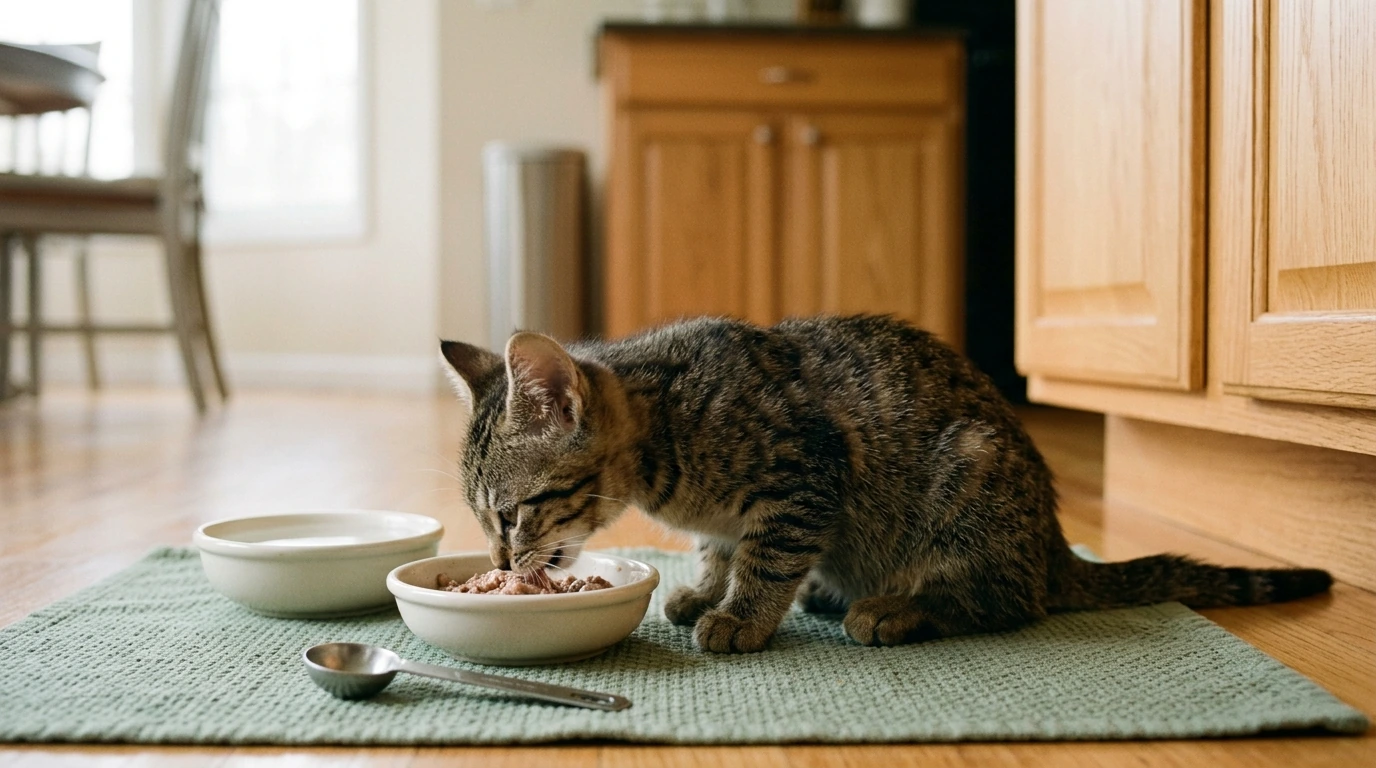
Feeding a New Kitten Right: Building Healthy Growth and Happy Mealtimes
A kitten’s first months set the foundation for lifelong health. The right food, portion sizes, feeding schedule, and safe transitions help support steady growth, strong bones, brain development, and a comfortable digestion routine—without turning mealtime into a struggle.
What Makes Kitten Nutrition Different
Kittens aren’t just “small cats.” Their bodies are building new tissue fast, and their energy needs are high—even when they take frequent naps. Compared with adult cats, kittens generally need more calories per pound to fuel growth and play.
Protein is a priority because it supports muscle development, plus essential amino acids like taurine help maintain normal heart function and healthy vision. Dietary fat adds concentrated energy and supports skin and coat health; many kitten formulas also include DHA to support brain and eye development.
Minerals matter, too. Balanced calcium and phosphorus levels are critical for healthy bones and teeth, which is why “eyeballing” homemade balance can backfire. Choosing a diet labeled complete and balanced for growth is the simplest way to cover these fundamentals reliably. For broader nutrition guidance across life stages, see the AAHA Nutrition and Weight Management Guidelines.
What Food to Start With: Wet, Dry, or Both
Most new kitten owners do well with wet food, dry food, or a combination—so long as the product is complete and balanced for growth (often labeled “kitten” or “all life stages”). Your best choice depends on your kitten’s preferences, hydration habits, and your schedule.
Quick comparison: common starter options
| Option | Benefits | Watch-outs | Best for |
|---|---|---|---|
| Wet kitten food | Higher moisture, strong palatability, easier to chew | Spoils quickly once opened; higher cost per calorie | Young kittens, low drinkers, picky eaters |
| Dry kitten kibble | Convenient, easy to portion, budget-friendly | Lower moisture; can be overeaten if free-fed | Busy schedules, kittens that drink well |
| Mixed feeding | Hydration support + easy portion control | Needs consistent measuring to avoid overfeeding | Most households seeking balance |
A few firm “no’s” help prevent common mistakes: don’t feed dog food, avoid unbalanced raw diets unless guided by a veterinary nutritionist, and skip cow’s milk (many kittens are lactose intolerant). For general feeding principles and how to interpret your cat’s needs as they grow, Cornell’s overview is a helpful reference: Cornell Feline Health Center: Feeding Your Cat.
Age-by-Age Feeding Rhythm (8 Weeks to 12 Months)
Consistency makes kitten feeding easier. Start with a predictable rhythm, then adjust portions based on growth and body condition rather than constantly changing foods.
- 8–12 weeks: Small stomachs do best with 3–4 meals per day. If you’re using wet food, a slightly warmed portion (not hot) can boost aroma and acceptance.
- 3–6 months: Many kittens thrive on 3 meals per day. Energy needs stay high, and growth remains rapid.
- 6–12 months: Transition toward 2 meals per day while watching body condition and weight trends.
Use the package feeding guide as your baseline, then refine. If appetite suddenly drops, your kitten seems lethargic, or vomiting continues, it’s safer to check in with a veterinarian than to keep swapping flavors and brands.
Portioning Without Guesswork: Body Condition and Growth Checks
Portions are easier to dial in when you watch the kitten—not just the bowl. Regular weigh-ins help confirm that your plan is working. A baby scale is ideal, but consistent weekly weigh-ins on a household scale can still reveal useful trends.
- Track steady growth: Big spikes can suggest overfeeding; plateaus can suggest underfeeding, parasites, or illness.
- Check body shape: Look for a visible waist from above and a gentle abdominal tuck from the side. Ribs should be easy to feel with light pressure, not sharply visible.
- Measure consistently: Use a standard scoop or kitchen scale. “A handful” changes every time.
- Keep treats modest: Treats should stay a small slice of daily calories so your kitten’s main diet provides the bulk of nutrients.
- Feed separately in multi-pet homes: It’s common for kittens to sneak adult food (or adults to steal kitten food), which can disrupt both diets.
Safe Food Transitions and Sensitive Tummies
Digestive upset is one of the most common early hurdles—often because changes happen too quickly. If you need to switch foods, take 7–10 days: start with mostly the old food, then slowly increase the new food each day.
Foods and Habits to Avoid
For a quick reference on common household hazards and toxins, the ASPCA Animal Poison Control resources are a practical bookmark for new pet homes.
Making Mealtimes Easy: Routine, Enrichment, and Multi-Cat Homes
A Guided Plan for Confident Feeding Decisions
If you want a structured, step-by-step approach—what to buy first, how to set portions, how to transition foods, and what red flags to watch for—this guide is built specifically for new kitten owners: Feeding Your New Kitten Right: Essential Kitten Nutrition eBook.
- Break the Tension: Stress Relief Techniques
- The Anxiety Relief Bundle: A Path to Calm (4-in-1 Bundle)
FAQ
How often should a new kitten eat each day?
Most kittens do best with 3–4 meals daily at 8–12 weeks, about 3 meals daily from 3–6 months, and often 2 meals daily from 6–12 months. Adjust based on weight trend, body condition, and your veterinarian’s guidance.
Is wet food or dry food better for kittens?
Either can work if it’s complete and balanced for growth. Wet food supports hydration and is often highly palatable, while dry food is convenient and easy to portion; many households use a measured mix of both.
When can a kitten switch to adult cat food?
Many kittens transition around 12 months, but some larger breeds may need more time on a growth diet. Switch gradually over 7–10 days and confirm timing with your veterinarian based on growth and body condition.











Leave a comment